Waste and Environmental Pollution
Waste and Environmental Pollution
Milbon has defined the Milbon Group Environmental Policy, which set forth our responsibility to our planet through all of our processes, from product development to raw material procurement, manufacturing, distribution, sales, and customer use and disposal. In particular, we have selected environmental pollution, including waste and packaging, as a key focus area and are promoting initiatives to reduce environmental impact.
Increased Social Awareness
To address the global challenge of climate change, the Paris Agreement was adopted in 2015. It established two long-term global goals: "to keep the global average temperature rise well below 2°C above pre-industrial levels and to pursue efforts to limit the temperature increase to 1.5°C (the 2°C target)", and "to achieve a balance between anthropogenic greenhouse gas emissions by sources and their removals by sinks of in the second half of this century".
To achieve this, many countries and regions have set the goal of "carbon neutrality by 2050" and are implementing initiatives.
While plastic packaging materials are indispensable for stable supply and economic reasons, most are fossil-based, and their production consumes significant amounts of fossil fuels. Furthermore, disposing of packaging materials also requires substantial fossil fuels. Therefore, reducing plastic waste and promoting recycling are essential steps toward achieving the carbon neutrality goal.
Milbon's Perspective
We believe that reducing the amount of fossil-based plastics used throughout the entire process—from packaging material development to disposal—while also promoting the reuse and recycling of packaging materials is crucial for protecting the global environment and human health, as well as for ensuring business continuity.
Furthermore, by creating a beauty industry that enriches beauty and the spirit through our collaboration with haircare professionals , our efforts toward realizing a sustainable society represent an opportunity to earn the trust of our customers and society.
Targets and Approach
We have identified the most critical themes in our sustainability initiatives as our Five Key Challenges. For packaging, we have established the following goals.
Reduction rate of petroleum-derived virgin plastic use:15% by 2026, 30% by 2030
Compared to 2020 levels, per unit of sales
Milbon is reducing its usage of petroleum-derived virgin plastic by promoting the 4R approach (reduce, replace, reuse, recycle), to better utilize limited resources and address global warming.
Progress toward the goal
| 2021 | 2022 | 2023 | 2024 | 2025 | |
|---|---|---|---|---|---|
| Reduction rate of petroleum-derived virgin plastic | 3.7% | 0.4% | 9.2% | 11.6% | 16.4% |
Specific Initiatives
Reducing Plastic Usage
Milbon is reducing the amount of plastic used in packaging materials.
(1) Smaller caps for hair color tubes
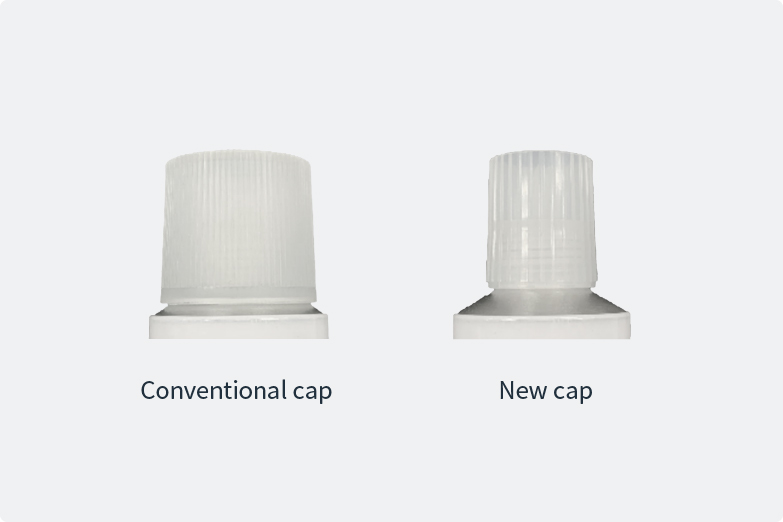
We have adopted a new, smaller cap design for the packaging of our hair color brand "ENOG", launched in 2022.
In developing this smaller cap, we successfully reduced the amount of plastic used per unit from 3.5g to 1.6g, achieving an approximately 54% reduction compared to the previous design, while maintaining the ease of opening of the conventional product.
This cap is being progressively rolled out to hair color products under our other brands.
At Milbon, permanent hair color products accounts for approximately 40% of our total product shipments (FY2020 results).
Once the switch to the new cap design is completed for all our hair color products, we anticipate reducing plastic usage by approximately 55 tons annually. This represents about 5.9% of the plastic used in our domestically produced products.
(Based on plastic usage ratio from FY2020 production at Milbon's Yumegaoka Factory)
(2) Capless refill pouch conversion
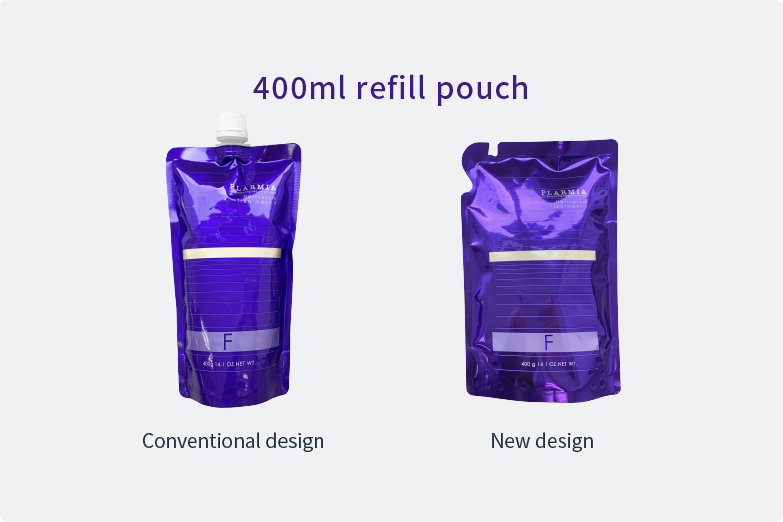
Previously, all sizes of our hair care refill pouches included a cap on the spout. We have changed the 400mL size, which is designed for single use, to a capless design. This change is part of our efforts to reduce plastic usage.
(3) Reducing plastic usage through thinner container bottle walls
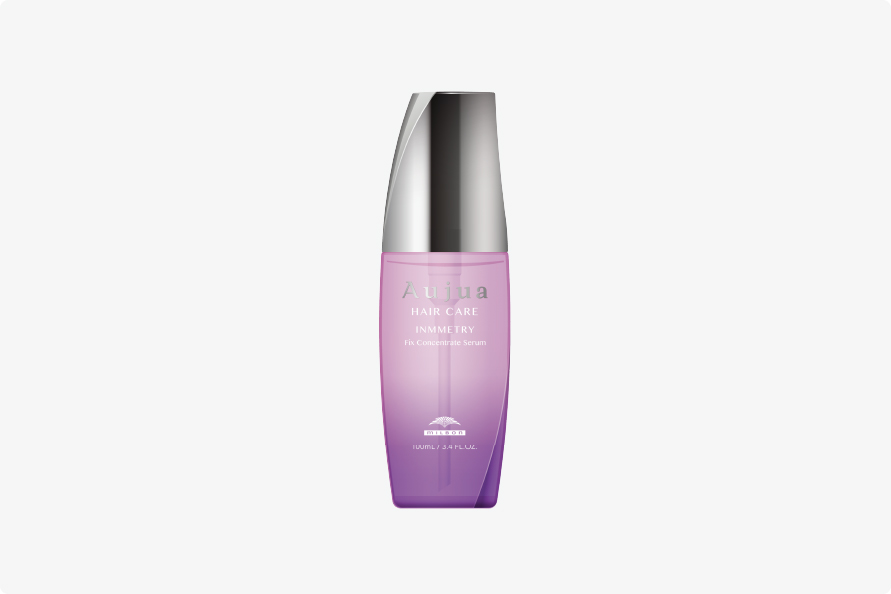
We have successfully reduced the bottle thickness of 17 Aujua Leave-in Treatment and 34 items of 500mL bottles, while maintaining their original ease of use and quality. This change is expected to reduce annual plastic usage by approximately 4.8 tons compared to previous designs.
Thinner bottles are being adopted starting with the 2023 new product "Aujua Inmetry" for Leave-in Treatment and the 2024 new product "Aujua Presedia" for the 500mL bottle. Existing items will be transitioned to the thinner bottles sequentially.
Replacement of Plastic Materials
Active use of bioplastic
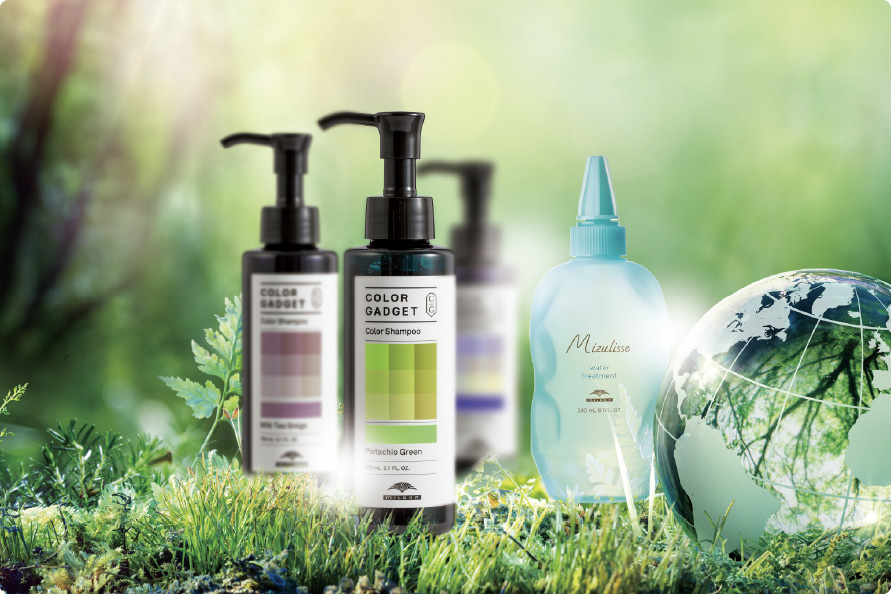
By replacing a portion of petroleum-derived plastics with plant-based plastics in product packaging, we are reducing plastic usage while maintaining the quality of containers.
We expect to reduce plastic usage by approximately 1 ton annually by using bio-based PET in the "COLOR GADGET Color Shampoo" and bio-based PE in "Mizulisse", both launched in September 2022.
Reuse of container
Recommending refill pouches
Milbon has been selling refill pouches for shampoos, hair treatments, and professional salon care products for over 20 years to promote the continuous use of containers.
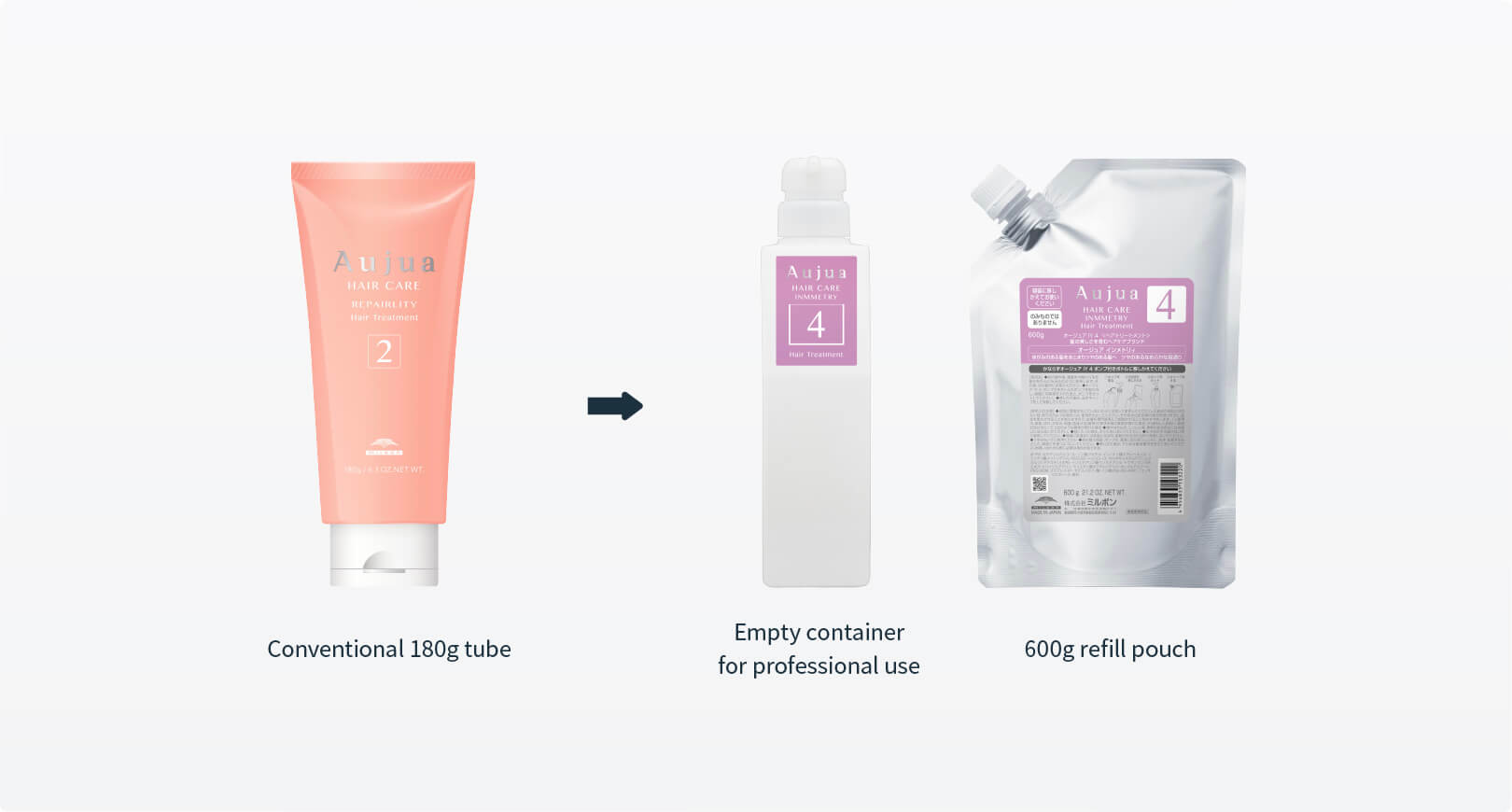
For Aujua professional salon treatments, we adopted refill pouches in the 2023 new product "Aujua Inmetry". Switching from the conventional 180g tube to a 500g pouch + shared professional empty container is expected to reduce plastic usage by approximately 5.5 tons annually.
Switching to materials suitable for recycling
Milbon has been participating in Kobe Plastic Next: Joining Forces to Recycle Refill Packs (plastic recycling) since October 2021. This initiative aims for "horizontal recycling" by collaborating with Kobe City, retailers, daily goods manufacturers, and recycling businesses to realize a circular society. It involves installing collection boxes throughout the city to separately collect used refill packs for daily goods such as detergent and shampoo, then converting them back into new refill packs.
As part of this initiative, we are progressively changing the materials for our refill pouches (1000mL) to make them suitable for horizontal recycling. This involves switching from the previously used aluminum pouches to aluminum-coated pouches and replacing from paper labels with plastic labels.